Final Thoughts
Building trust online is no longer optional for modern businesses—it is a fundamental requirement for long-term success. In a digital environment where users constantly compare options, analyze content, and make quick decisions, trust becomes the key factor that separates successful brands from those that struggle to grow.
A business that prioritizes trust does not focus only on short-term conversions. Instead, it builds a strong foundation for long-term relationships, repeat visitors, and consistent growth. While this approach requires time and effort, the results are far more stable, reliable, and sustainable.
One of the most important aspects of trust-building is understanding that it does not come from one big action. Instead, it is created through multiple small and consistent efforts. Every detail matters—from website design and loading speed to how clearly you communicate your message. A well-structured website, honest content, and a smooth user experience all play a vital role in shaping user perception.
However, in today’s competitive landscape, simply having a clean website is not enough. Businesses must also adopt modern strategies to improve their visibility and engagement. Learning proven methods, such as those explained in this (digital marketing strategies for beginners) guide on your website, can help businesses understand how to attract the right audience and build credibility over time.
Consistency is another major factor that directly impacts trust. Users feel more comfortable when they see regular updates, stable branding, and clear communication across all platforms. Whether it is your website, blog, or social media channels, maintaining a consistent tone and message shows professionalism and reliability. This consistency helps users recognize your brand and builds familiarity, which naturally leads to trust.
In addition to consistency, delivering real value is essential. Businesses that focus only on selling often fail to build long-term relationships. On the other hand, those that educate and guide their audience gain authority and credibility. For example, individuals who want to earn online are more likely to trust platforms that provide practical and step-by-step guidance, such as this detailed resource on (start freelancing in 2026), which explains the process in a beginner-friendly way.
Similarly, targeting specific audiences with valuable content can further strengthen trust. Students today are actively exploring online career opportunities, especially in digital fields. Providing clear and structured guidance—like in your article on (how students can start a digital marketing career in 2026)—not only builds trust but also positions your platform as a helpful and reliable source of information.
Security and transparency are also critical components of trust-building. Users want to feel safe when they visit a website, especially when sharing personal information. Features like HTTPS encryption, clear privacy policies, and transparent business details reassure visitors that they are interacting with a legitimate and responsible brand. According to best practices shared by Google Search Central, secure and user-friendly websites are more likely to perform well in search rankings and gain user confidence.
Another powerful trust factor is social proof. People tend to trust the experiences of others more than direct brand messaging. Reviews, testimonials, and case studies provide evidence that your business delivers real value. Even a small number of genuine reviews can significantly influence user decisions. Platforms like Trustpilot and Google Reviews are widely used by users to verify the credibility of a business before making a decision.
Content freshness is equally important. Outdated information can quickly reduce trust and make a website look inactive. Regularly updating your content—whether it is blog posts, service pages, or guides—shows that your business is active and committed to providing accurate information. This practice not only improves user experience but also aligns with SEO recommendations from platforms like Moz and HubSpot, which emphasize the importance of updated and relevant content.
Clear and honest communication further strengthens trust. Businesses should avoid exaggerated claims and unrealistic promises. Instead of focusing on instant results, presenting realistic expectations and genuine benefits creates a more trustworthy image. Users appreciate transparency and are more likely to engage with brands that communicate honestly.
Moreover, adaptability plays a crucial role in maintaining trust over time. The digital world is constantly evolving, and businesses must stay updated with new trends, technologies, and user behaviors. This includes improving website performance, optimizing for mobile devices, and staying active on relevant platforms. Businesses that adapt quickly are seen as more reliable and forward-thinking.
Another often overlooked factor is user experience. A website that is easy to navigate, fast to load, and mobile-friendly creates a positive impression. On the other hand, slow-loading pages, broken links, or confusing layouts can quickly damage trust. Paying attention to these technical details ensures that users have a smooth and enjoyable experience.
Ultimately, trust is built gradually. It cannot be achieved overnight, and it cannot be forced. Every positive interaction—whether it is helpful content, fast support, or a smooth browsing experience—adds to your credibility. At the same time, even small negative experiences can reduce user confidence. This is why businesses must consistently focus on quality and user satisfaction.
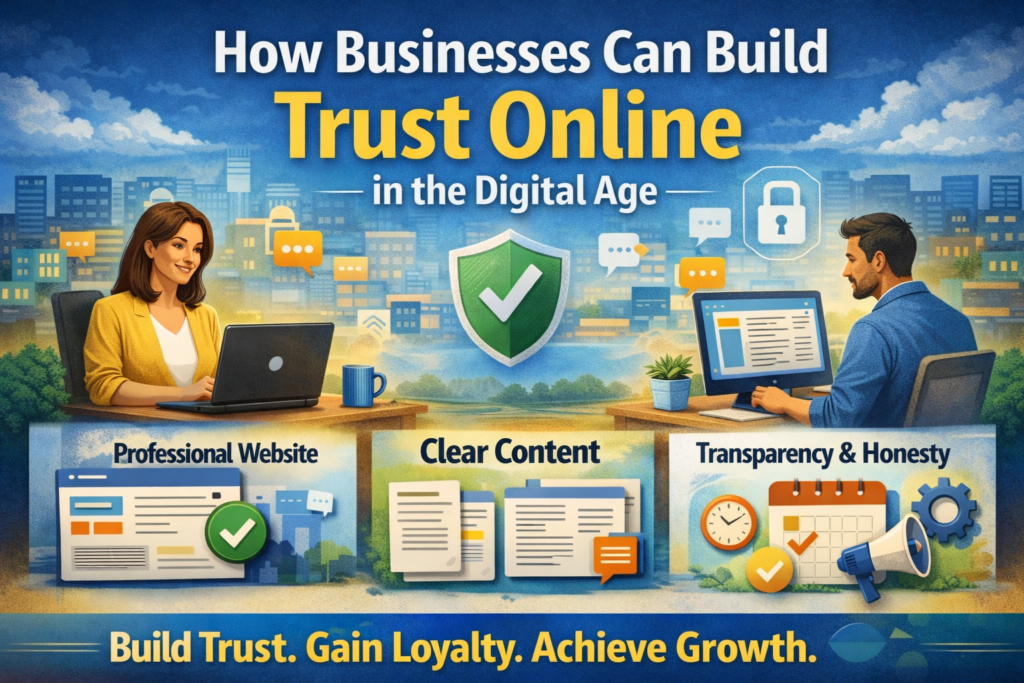
In conclusion, building trust online requires a complete and balanced approach. It involves professional website design, valuable content, consistent branding, transparency, and the use of modern digital strategies. Businesses that invest in these areas not only stand out in a crowded market but also create long-term relationships with their audience.
When trust becomes the foundation of your business, growth follows naturally. Instead of chasing short-term gains, focusing on long-term value ensures stability, credibility, and sustainable success in the digital world.



Pingback: Grow Business Online: Freelixa Strategies 2026